It is a common scenario when moving across a city or visiting friends just a few miles away: you fill up a glass of tap water, take a drink, and notice it tastes completely different from the water in your own kitchen. In one neighborhood, the water might taste incredibly crisp and neutral; in another, it might carry a heavy mineral weight, run slightly flat, or have a distinct chlorine tang.
Many people assume that because a single municipal entity manages a city’s utilities, every neighborhood receives identical water. But tap water quality and flavor are not uniform.
The flavor profile of your water is a direct reflection of local geography, infrastructure age, and complex distribution physics. Certain neighborhoods experience dramatic day-to-day or season-to-season taste variation, while others enjoy absolute consistency. Here are the real reasons behind the shifting flavor lines of your city’s water grid.
1. The Multi-Source Blending Effect
The primary reason one neighborhood experiences high taste variation while another remains stable comes down to where the water originates. Large municipal water systems rarely rely on a single, isolated water source to supply an entire city. Instead, they manage a portfolio of sources, including deep underground aquifers, surface-level reservoirs, flowing rivers, and glacial runoff.
Each of these raw water sources possesses a distinct chemical fingerprint and baseline flavor profile. Deep groundwater is rich in dissolved minerals like calcium, magnesium, and silica, giving it a heavy, slightly sweet, or smooth mouthfeel. Surface water from rivers and reservoirs is much lower in minerals but contains natural organic compounds that can give it an earthy or crisp tone.
Because cities grow unevenly, water infrastructure is built in phases. Neighborhoods located closest to a specific groundwater pumping station will almost always receive 100% well water, maintaining a consistent, mineral-heavy taste year-round. However, neighborhoods sitting at the intersection of two major distribution zones live in a “blending sector.”
Depending on daily demand, seasonal water levels, or routine maintenance, the city will dynamically adjust its valves. One week your tap may pour a crisp river blend, and the next it may shift to a heavy mineral aquifer profile. This structural shifting is a normal part of resource management. Developing a foundational grasp of water basics allows you to recognize how these natural mineral variations shape the baseline character of your daily drink.
2. Proximity to Treatment Loops and Disinfection Decay
The taste of your water is heavily influenced by how far it has traveled through the subterranean network to reach your faucet. Municipalities must add disinfectants—usually chlorine or chloramines—at primary treatment plants to eliminate biological pathogens and keep the water safe as it journeys across town.
However, chlorine is a volatile chemical compound that naturally degrades and dissipates the longer it remains inside a pipe, a process known as disinfection decay.
The Distance Dilemma:
- “Front of the Line” Neighborhoods: Communities built directly adjacent to a water treatment plant or a secondary booster chlorination station receive water that has had very little time to age. Because the disinfectant hasn’t decayed, these neighborhoods often experience a sharp, distinct pool-like chlorine taste and smell.
- “End of the Line” Neighborhoods: Neighborhoods located at the geographic periphery of the distribution grid receive water that may have spent days traveling through miles of underground mains. In these zones, the chlorine taste has completely faded, but the water may taste flat or pick up subtle earthy notes from prolonged pipe contact.
Understanding that chemical profiles naturally shift across a city grid underscores why water character isn’t accidental. Gaining a clearer perspective on how these large-scale municipal treatment pathways are engineered can help you better understand these localized variations. Investigating the mechanics of urban water systems provides crucial context on why your tap echoes your neighborhood’s coordinate on the utility map.
3. Micro-Geographic Structural Materials
The age and material composition of the water mains buried beneath your specific neighborhood streets act as a literal seasoning mechanism for your water supply.
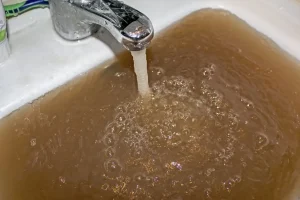
In older, historic districts, water lines are often constructed from unlined cast iron or galvanized steel. Over a half-century of continuous service, these metals interact with the water, developing internal rust scaling. When water demand spikes in the evening, or when a fire hydrant is opened down the block, the sudden change in water velocity shears off microscopic iron particles, giving the neighborhood’s water a temporary metallic or blood-like flavor profile.
Conversely, newer master-planned communities utilize modern PVC, ductile iron lined with protective cement, or high-density polyethylene (HDPE) pipes. These synthetic and lined materials are completely non-reactive. They do not leach minerals or absorb odors, ensuring that the water arrives at the property line tasting exactly as it did when it left the filtration facility.
4. Hydraulic Stagnation and Cul-de-Sac Dead Ends
The physical layout of a neighborhood’s street grid plays a fascinating, hidden role in fluid dynamics and taste consistency.
Modern suburban developments heavily feature cul-de-sacs, looping crescents, and dead-end streets designed to minimize vehicular traffic. However, this fragmented surface design means the underlying water grid must often mimic those exact dead ends, creating what engineers call “dead-end mains.”
In an open, looping grid typical of traditional city downtowns, water is under continuous movement, circulating through interconnected pipes whenever anyone on the block opens a tap. Fresh water is constantly pulled through the system.
In a dead-end main at the back of a quiet cul-de-sac, water can sit completely motionless for long stretches, especially during the workday or overnight. This stagnation allows the water to lose its dissolved oxygen, causing it to taste flat. It also gives the sitting water ample time to absorb ambient heat from the surrounding soil and interact with internal pipe scales. This creates localized taste profiles that can vary wildly from a high-traffic avenue just one block away.
5. Terminal Demands and Home Fixture Chemistry
Sometimes, the city delivery grid performs perfectly, but the intense taste variation is created in the final fifty feet of transit—inside your home’s private plumbing and terminal fixtures.
When water enters your property, it rests against your home’s unique interior pipe profile. If your property uses older brass valves, copper piping with lead-based solder, or cheap flexible rubber appliance hoses, stagnant water will pick up sharp metallic or synthetic chemical notes within hours.
The Aerator Accumulation Point:
The very last component your water touches before hitting your glass is the faucet aerator—the small, mesh screen cap screwed onto the end of your spout. Over time, this screen collects tiny bits of dislodged pipe scale, water heater sediment, and mineral debris.
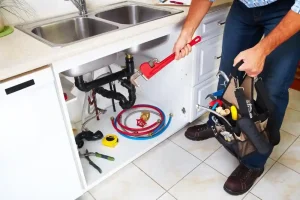
Every glass of water you pour passes directly through this trapped pocket of sediment, which can continuously leach mineral flavors into your stream. Keeping these endpoints clean is one of the most effective ways to manage your immediate indoor environment. Regularly maintaining and upgrading your plumbing fixtures prevents these localized terminal restrictions from warping your water’s true flavor profile.
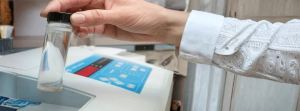
Recognizing these compounding variables helps you determine when a taste shift is a simple, harmless neighborhood characteristic and when it requires residential filtration. Discerning between normal distribution variables and genuine water quality facts ensures you can accurately evaluate your home’s supply and take targeted steps to optimize your daily drinking water.
Neighborhood Water Taste Variation Matrix
Tracking how these distinct structural factors combine can help explain your neighborhood’s specific flavor profile:
| Neighborhood Profile | Primary Infrastructure Attribute | Typical Taste Characteristic | Main Cause of Variation |
| Grid Boundary / Peripheral | Long transit distances, end-of-line mains. | Flat, faintly earthy, minimal chlorine notes. | Seasonal municipal flow adjustments and water aging. |
| Treatment Proximity | Short transit distances, front-of-line loops. | Sharp, clean, distinct chemical/pool aroma. | Daily booster chlorination cycles at the main plant. |
| Historic / Industrial Districts | Unlined cast iron, legacy service lines. | Metallic, bitter, or occasionally rusty tang. | Velocity shocks shearing loose scale from old pipe walls. |
| Suburban Cul-de-Sacs | Segmented plumbing paths, dead-end mains. | Stale, lukewarm, or flat mouthfeel. | Extended hydraulic stagnation in low-traffic loops. |
By understanding that water taste is shaped by multi-source blending, pipeline distances, structural grid materials, and terminal home fixtures, you can easily demystify the geography of flavor across your city and ensure your household water runs fresh, crisp, and perfectly tailored to your standards.
Are you looking for more actionable advice on how to troubleshoot unexpected changes in your household water quality or flow? Explore our extensive library of expert solutions and infrastructure guides by browsing our comprehensive articles on the blog.