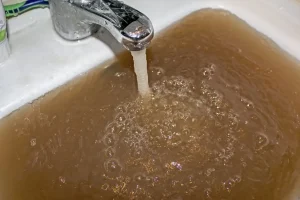
It is a uniquely frustrating household moment: you turn on the kitchen faucet to rinse some dishes or fill a pot, and the water comes out as a weak, sputtering trickle. Or perhaps you step into the shower only to realize the water has an unusual, earthy aroma, or leaves a faint rust-colored tint in the tub.
Your immediate, entirely natural instinct is to assume the municipality is at fault. It is easy to imagine a water main break down the street, a failure at the local treatment plant, or a city-wide supply crisis.
However, before you spend forty-five minutes on hold with your local department of public works, it is vital to perform a quick, systematic audit of your own property. Because our plumbing lines are deeply interconnected with municipal grids, many issues that mimic massive city-wide failures are actually highly localized, internal problems. Checking these key components first can save you time, money, and unnecessary stress.
1. Conduct the “All Faucets” Test
When you notice a sudden drop in water pressure or an odd change in water clarity, your very first step should be to walk through your home and test multiple fixtures.
If you only noticed the issue at your kitchen sink, check the downstairs bathroom, the upstairs shower, and the outdoor garden hose.
If the water pressure is perfectly fine everywhere else in the house except for that one kitchen faucet, the city is completely absolved of blame. You are dealing with an isolated internal bottleneck.
The Likely Internal Culprits:
- The Faucet Aerator: The tiny, screw-on mesh screen at the tip of your spout can easily become clogged with mineral scale, rust flakes, or tiny pieces of plastic broken off from internal appliance components.
- A Failing Cartridge: The internal valve mechanism inside the faucet handle can wear out, slip out of alignment, or become blocked by debris, restricting flow to that single fixture.
Regularly unscrewing your aerator screens and rinsing out trapped debris is one of the simplest ways to maintain your home’s delivery points. Keeping these endpoints clear prevents localized restrictions from mimicking systemic pressure drops. Regularly maintaining and upgrading your plumbing fixtures ensures your home’s terminal defense line remains fully functional and free of internal blockages.
2. Isolate the Hot vs. Cold Water Line
If the water issue is affecting multiple fixtures across your home, your next diagnostic step is to separate the hot water supply from the cold water supply. Turn on the cold tap completely and evaluate the pressure, color, and smell. Then, turn off the cold, turn on the hot tap, and repeat the evaluation.
If your cold water runs perfectly clear, pressurized, and odorless, but your hot water runs discolored, smells like rotten eggs, or struggles with low pressure, the issue sits squarely on your property lines—specifically inside your water heater.
Water Heater Warning Signs:
Over years of continuous heating, dissolved minerals naturally precipitate out of your water and settle into a thick layer of sediment at the bottom of your hot water tank. If left unmaintained, this sediment buildup acts as an insulator over the burner, reduces the tank’s holding capacity, alters water pressure, and can introduce a metallic or foul taste to your hot water lines. Learning to differentiate between these independent hot and cold operational paths is an essential part of ongoing property care. Gaining a solid grasp of fundamental water basics allows you to accurately read your system’s performance before making unnecessary phone calls.
3. Consult with Your Immediate Neighbors
One of the fastest ways to determine if a water issue is public or private is to leverage your neighborhood network. Step outside or send a quick text to the residents living immediately to your left, your right, or directly across the street.
Are they experiencing the exact same drop in water pressure or discoloration?
- If yes: The issue is almost certainly municipal. A local water main may have ruptured, a fire hydrant down the street might be open, or the city may be actively flushing the neighborhood grid.
- If no: If your neighbors are washing cars and running sprinklers with perfect pressure while your house struggles, the problem is isolated to your specific property. The main water shut-off valve in your basement might be partially closed, or your private main service line—the underground pipe running beneath your front lawn to the street—may have developed a structural leak or blockage.
4. Check Your Whole-House Filtration Systems
If your home is equipped with an inline water softener, a whole-house sediment filter, or a reverse osmosis system, these units represent a major checkpoint before pointing fingers at city infrastructure.
Whole-house filtration systems work by forcing your incoming water supply through dense physical or chemical barriers to remove impurities.
Over time, these filters do their job so well that they become completely saturated with trapped sediment, iron, and mineral debris. When a filter reaches the absolute end of its operational lifespan, it transforms into a massive bottleneck, causing a severe drop in water pressure and potentially releasing concentrated mineral flavors or trapped odors back into your plumbing lines. Before calling the city, bypass your filtration system temporarily using the unit’s manual valve loop to see if your home’s pressure and quality instantly recover.
Understanding how external water quality interacts with your internal filtration defense is vital to managing a smooth household. Distinguishing between normal filtration wear-and-tear and broader municipal water quality facts can help you take the right corrective actions quickly.
5. Review the Surrounding Street Infrastructure
Sometimes, the city is indeed to blame, but you don’t need to call them because they are already fully aware of the issue. Before picking up the phone, take a quick look out your front window or drive down your immediate block.
Look for key indicators of municipal utility activity:
- Utility Trucks: Are there city vehicles or sub-contractors parked near the intersection with flashing lights?
- Open Hydrants: Is water actively gushing down the street gutters from a neighborhood fire hydrant? Cities regularly flush hydrants to maintain fire readiness and clear out accumulated sediment within the main grid. This necessary maintenance temporarily alters localized water velocity and can cause household taps to briefly sputter or run cloudy.
Gaining a clearer perspective on how these large-scale municipal grids handle routine maintenance, pressure balancing, and emergency repairs can save you a lot of guesswork. Investigating the broad operations of urban water systems can provide excellent context on why your tap water occasionally echoes street-level maintenance.
Pre-Blame Plumbing Diagnostic Checklist
Running through this quick reference hierarchy can help you determine exactly who to call when water issues strike:
| Diagnostic Test | Municipal Indicator | Private Property Indicator | Immediate Action |
| The Multi-Fixture Test | Problem occurs across all faucets, showers, and outdoor bibs. | Problem is limited to a single sink, bathroom, or appliance. | Clean the isolated faucet aerator or clear the internal fixture cartridge. |
| The Thermal Test | Both hot and cold lines suffer from identical pressure or odor issues. | Cold water is pristine; hot water runs discolored or smells like sulfur. | Flush your home’s hot water heater tank to clear out accumulated mineral sediment. |
| The Neighbor Check | Surrounding homes are experiencing the exact same plumbing disruption. | Nearby properties have perfect water flow and clarity. | Check your private main shut-off valve; inspect your front lawn for soggy spots. |
| The Filtration Bypass | Bypassing the whole-house filter changes nothing. | Bypassing the filter instantly restores full household pressure and taste. | Replace your system’s clogged sediment cartridges or service the water softener. |
By systematically isolating your fixtures, comparing your hot and cold lines, checking in with your immediate community, and monitoring your own filtration gear, you can easily rule out internal property quirks and ensure that if you do eventually call the city, you have the hard data required to get the problem resolved fast.
Are you looking for more actionable advice on how to troubleshoot sudden changes in your household water flow or clarity? Explore our library of expert solutions by browsing our comprehensive articles on the blog.