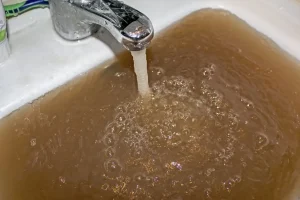
Why some homes see brown water after a vacation is easiest to understand when you stop treating it as one isolated water mystery and start treating it as a clue about how a system is behaving. In many cases, stagnation, first-use flushing, and long periods of no flow are what make a home, a building, or a whole block feel inconsistent even when residents assume the water should behave the same everywhere. That is especially true in homes after time away, where timing, building age, mixed materials, and infrastructure activity all shape what comes out of the tap.
The most useful framework is simple: follow the path. Water comes from a larger system, moves through local infrastructure, enters the building, and then passes through fixtures and household habits before anyone judges it. That is why the Plumbing & Fixtures page and the Water Quality Facts section matter so much. They help residents connect what they notice at the endpoint to the larger route that made that endpoint behave the way it did.
Why the pattern matters more than the first complaint
Residents often notice the symptom first and the pattern much later. A shower swings temperature. A faucet spits sediment once. A kitchen tap smells different for one hour and then seems fine. But in everyday plumbing and water behavior, timing tells the real story. Does it happen only after no one has used the line? Only during morning demand? Only in one room? Only after nearby work? These details are not small. They are often the difference between a local fixture issue and a neighborhood explanation.
This is why the Tap Facts FAQ is so practical. Instead of asking only “What is wrong?” it encourages people to ask “When, where, and under what conditions?” In water troubleshooting, that is usually the better question.
Local hardware often shapes the whole experience
Even when a city or neighborhood pattern is part of the story, local fixtures and plumbing age often decide how strongly the resident feels it. An older faucet, aging flex line, narrow cartridge, scaled shower body, or partially updated branch line can exaggerate what might otherwise have felt minor. This is one reason why neighbors describe the “same” issue very differently.
What public guidance supports
Public drinking-water guidance generally reinforces that tap experience is shaped both by source-system conditions and by building plumbing. The EPA’s drinking water information and the CDC’s drinking water resources both support the broader principle that local plumbing conditions, aging fixtures, and use patterns can influence what consumers actually see and taste at home.
That does not mean every odd taste, cloudiness event, or pressure drop is a health crisis. It does mean the right explanation often depends on looking at the route and the pattern instead of reacting to one dramatic moment alone.
How to compare the issue practically
A good first comparison usually includes at least three things: more than one fixture, more than one time of day, and hot versus cold whenever that makes sense. If only one endpoint is affected, local fixture or branch conditions are much more likely. If several fixtures in different rooms show the same change at the same time, the problem may be broader. If only hot water is involved, the heater path and hot-side plumbing deserve more attention than the city supply does.
The Tap Facts blog keeps returning to that lesson because it is the one people skip most often. Comparison is what turns vague frustration into a useful diagnosis path.
Why age and renovation history matter
Older homes and older multifamily buildings rarely behave like one uniform plumbing system. Instead, they often behave like several plumbing eras stacked together: original routes, partial replacements, newer fixtures, older shutoffs, mixed materials, and endpoint upgrades that may or may not have changed the hidden path. This is why “updated” does not always mean “predictable.” It also explains why buildings with the same source water can still feel completely different from the inside.
The contact page is especially helpful when you have already noticed the pattern but need help deciding whether it points to one fixture, one building, or something outside the property. Narrowing the route is usually the hardest part, and it is also the most useful one.
The takeaway
Why some homes see brown water after a vacation becomes much easier to understand when you treat it as a clue about the route water took and the conditions it passed through. In most homes and neighborhoods, stagnation, first-use flushing, and long periods of no flow are not random annoyances. They are signs of timing, materials, building age, or local infrastructure all showing themselves in a very ordinary daily moment.
The best response is practical: compare the fixtures, compare the timing, and let the pattern lead the explanation. In everyday tap behavior, that approach usually tells you far more than the first dramatic impression ever will.