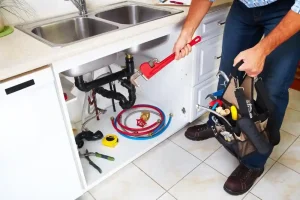
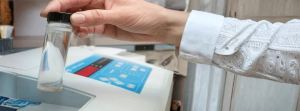
It is a common scenario for many homeowners: a city water main breaks down the street, or a massive rainstorm floods the local utility grid. The city fixes the pipe, the storm passes, and municipal workers declare the water supply fully restored. Yet, inside your house, your faucets continue to sputter, the water pressure fluctuates intermittently, and the taste remains slightly off for three or four days afterward.
It can feel as though your home’s pipes have a mind of their own, actively “remembering” the stress of the event long after the initial problem has been resolved.
This plumbing memory isn’t an illusion. When a water system experiences a sudden shock, it disrupts a highly delicate balance of pressure, velocity, chemistry, and physics inside your private pipes. Re-establishing that balance takes time. Here is the science behind how your internal plumbing stores and gradually releases the effects of an environmental disturbance for days.
1. The Disruption of the Internal “Scale” Layer
To understand why pipes hold onto disturbances, you first have to look at what the inside of an old pipe actually looks like. It is almost never a perfectly smooth metal or plastic tube. Over years of daily use, dissolved minerals in your water supply gradually precipitate out of the liquid and bond to the pipe walls.
This process creates a thin, stable mineral coating known as “scale” or passivation. Under normal, everyday conditions, this layer is completely harmless and actually acts as a protective shield, preventing the flowing water from directly corroding the raw metal of your pipes.
However, when a major disturbance occurs—such as a sudden drop in water pressure from a nearby main break, or a violent surge of high-velocity water when the system is turned back on—it triggers a phenomenon known as hydraulic shearing.
The abrupt change in speed and pressure acts like a pressure washer against the interior walls of your plumbing. The stable mineral scale fractures, flakes, and breaks loose. Long after the city repairs the main line, these microscopic flakes of iron, copper, and calcium continue to slough off into the water stream, causing a metallic taste or faint discoloration that can linger for days as the pipe walls slowly stabilize.
2. Trapped Air Pockets and the “Water Hammer” Echo
When a plumbing system is breached for repairs, or when a water main empties out completely, air rushes into the vacant space. Once the line is refilled, municipal workers flush the hydrants to vent as much of that air as possible. However, millions of tiny air bubbles inevitably escape into the private service lines leading to residential homes.
Once air enters your home’s internal plumbing network, it becomes an erratic, lingering nuisance.
Water is incompressible, meaning it maintains its volume under pressure. Air, on the other hand, is highly compressible. When air bubbles travel through your vertical pipe stacks and get trapped in dead-end pipe legs (such as the capped pipes behind your shower walls designed to cushion pressure shifts), they act like compressed springs.
Every time you turn a faucet on or off, these trapped air pockets compress and expand violently, causing pressure drops, sputtering flows, and a loud banging noise known as a water hammer. It can take several days of regular household water usage—showering, running the dishwasher, and flushing toilets—to completely dissolve and carry those stubborn pockets of compressed air out of the high points of your system.
3. The Accumulation Shock at the Finish Line
Sometimes, the plumbing network itself clears the disturbance relatively quickly, but your home’s terminal fixtures act as a storage vault for the aftermath.
Every modern faucet, showerhead, and appliance intake valve is equipped with protective barriers designed to keep debris out of your clean water. The most common of these is the faucet aerator—the tiny, fine-mesh screen screwed onto the tip of your spout.
When a major system shock stirs up decades of settled sediment and rust from the bottom of the street mains, that debris travels straight into your home and slams directly into these fine mesh screens.
The Clogged Aerator Effect:
Even if the city water runs perfectly clear again after twelve hours, the sediment trapped against your aerator screens stays put. This debris restricts water flow, mimics a permanent drop in water pressure, and can cause your water to taste flat or earthy for days. To keep your system running at peak performance and clear out these post-disturbance bottlenecks, regularly maintaining and cleaning your plumbing fixtures is an absolute necessity.
4. Temperature Stagnation in Water Heaters
Your home’s hot water tank is essentially a giant, slow-moving storage reservoir. When a municipal disturbance pushes turbid, sediment-heavy water into your property, a significant portion of that unrefined water settles right at the bottom of your water heater.
Because a hot water tank holds anywhere from 40 to 80 gallons of water and heats it slowly, it possesses a massive operational lag.
The heavy sediment sits on the burner element at the bottom of the tank, altering the heating efficiency and slowly releasing mineral flavors into your hot water lines every single time you take a warm shower. While your cold water tap might taste completely normal twenty-four hours after an incident, your hot water line can hold onto the taste and smell of a system disturbance for a week or more, until the tank has gone through enough thermal and volume cycles to completely flush out the settled particulates.
5. Identifying True Structural Damage Versus Temporary Echoes
For the average homeowner, the key challenge is determining whether a lingering post-disturbance issue is simply a harmless operational echo or a sign of permanent structural damage to your private lines.
If your water remains persistently muddy, smells strongly of sulfur, or if you notice a sudden, unexplainable spike in your water utility bill after a major local incident, the external pressure shock may have cracked an aging underground service line on your property. Learning to read these baseline operational changes is an invaluable skill. Developing a strong grasp of water basics allows you to accurately evaluate your system’s performance and determine when it’s time to transition from waiting things out to calling a licensed professional.
Post-Disturbance Plumbing Recovery Timeline
Understanding how your home recovers from an external system shock can help you manage your household use effectively:
| Phase / Timeline | What the Pipes are Doing | What You See at the Tap | Recommended Action |
| Hours 1 – 12 | Compressed air and heavy street sediment enter the residential line. | Severe sputtering, brown/yellow water, loud pipe banging. | Avoid running hot water or appliances; flush cold water from an outdoor hose bib. |
| Days 1 – 2 | Fractured mineral scale continues to shed; air migrates to high bends. | Light cloudy water, erratic pressure shifts, metallic taste. | Remove and rinse faucet aerator screens; run cold taps for 2 minutes before drinking. |
| Days 3 – 4 | Trapped air pockets fully dissolve; water heater tank gradually cycles through. | Normal cold water, but hot water lines may still carry an earthy smell. | Run a short empty hot-water wash cycle to accelerate tank turnover. |
By recognizing that internal plumbing is a highly interconnected mechanical grid prone to pressure traps, scale shedding, and fixture bottlenecks, you can easily demystify the lingering side effects of a major system disturbance and safely guide your household back to fresh, stable operational flow.
Are you looking for more detailed information on how municipal distribution grids handle pressure, flow, and filtration before water ever reaches your property lines? Gain a comprehensive understanding of the broader infrastructure by browsing our in-depth guides on urban water systems.